

MENLO PARK TREE SERVICE
Tree Service in Menlo Park, CA
Menlo Park's story dates back to 1854, when Irish settlers named their Peninsula estate after their former home in County Galway, with the arrival of the railroad later helping shape the growing community. Today, neighborhoods such as The Willows, Allied Arts, Sharon Heights, Belle Haven, Suburban Park, and Linfield Oaks feature established landscapes and mature trees.
JJI Tree Service provides professional tree removal, tree trimming, tree pruning, stump grinding, and emergency tree services throughout Menlo Park, CA. Our licensed and insured team helps homeowners maintain healthy trees, address hazardous conditions, and protect the safety, beauty, and value of their properties.
Tree Trimming & Pruning
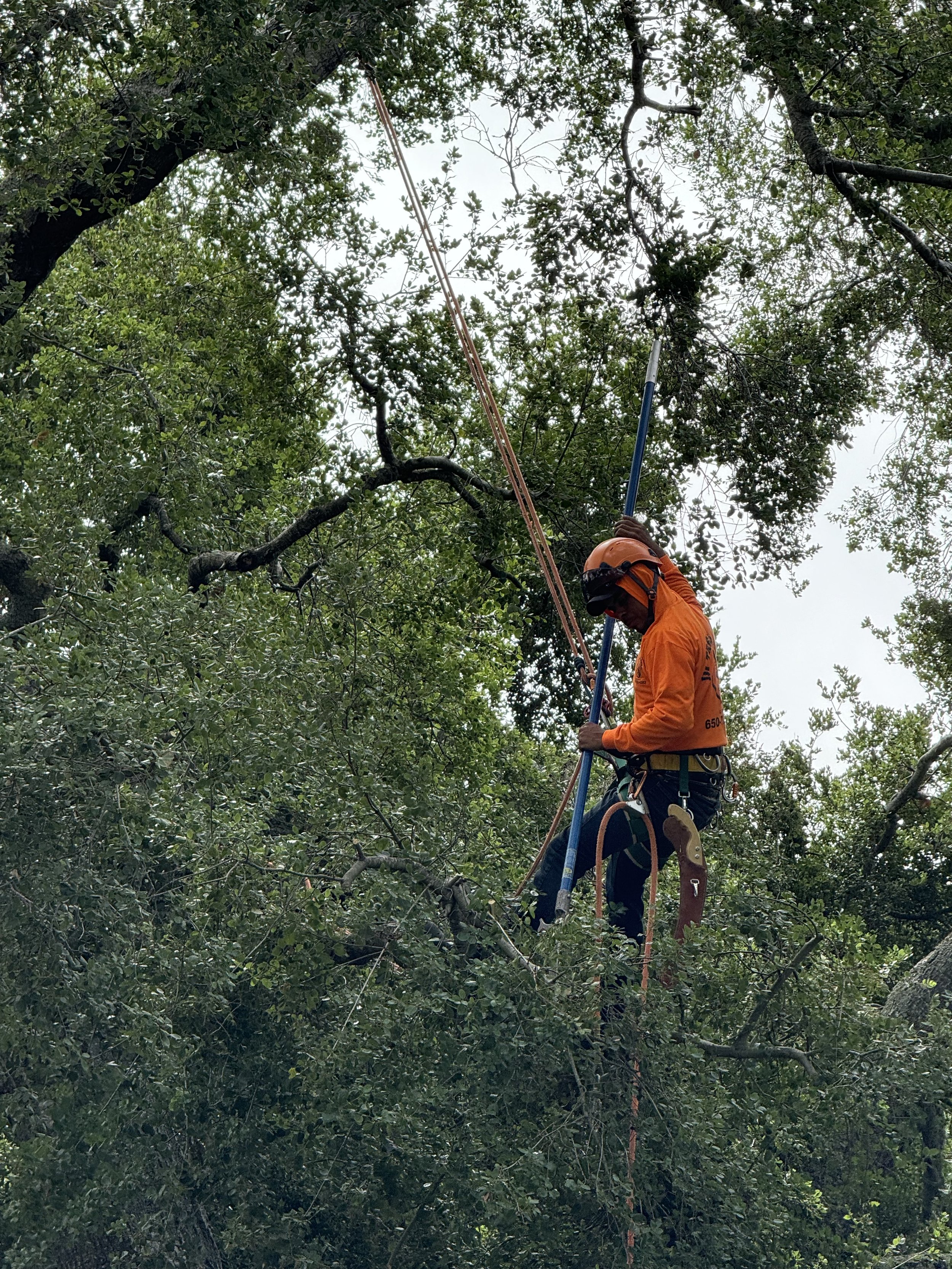
Mature trees are an important part of Menlo Park's established neighborhoods, but healthy canopies require thoughtful care as they grow around homes, driveways, and outdoor spaces. JJI Tree Service specializes in professional tree trimming and pruning in Menlo Park, CA, with services ranging from structural pruning and deadwood removal to crown thinning, clearance pruning, and selective canopy reduction.
Our experienced team focuses on making purposeful cuts that improve branch structure, reduce potential hazards, provide needed clearance, and support healthy growth without compromising the tree's natural form.
Crown Cleaning
Remove dead, diseased, broken, and crossing branches to improve tree health, enhance appearance, and reduce potential hazards.
Crown Thinning
Selectively remove interior branches to increase sunlight penetration, improve air circulation, and reduce wind resistance while preserving the tree's natural shape.
Crown Reduction
Reduce the height or spread of a tree by pruning back to appropriate lateral branches, maintaining its natural form while minimizing stress.
Crown Raising
Remove lower branches to provide clearance for buildings, driveways, sidewalks, vehicles, and pedestrians while maintaining a balanced canopy.
Structural Pruning
Improve the long-term health and stability of young trees by developing a strong branch structure and reducing future defects.
Hazard Reduction Pruning
Remove weak, damaged, or overextended branches that pose a risk to people, property, or surrounding structures.
Deadwood Removal
Safely remove dead branches throughout the canopy to improve safety, reduce the risk of falling limbs, and maintain tree health.
Vista Pruning
Carefully prune selected branches to preserve scenic views while maintaining the tree's health, structure, and natural beauty.
Restoration Pruning
Restore storm-damaged, neglected, or improperly pruned trees using professional pruning techniques that encourage healthy regrowth.
Menlo Park Pruning Ordinance
Menlo Park's Heritage Tree Ordinance protects mature trees that contribute to the city's urban canopy and establishes specific requirements for significant pruning. A City permit is required before removing more than 25% of a Heritage Tree's crown or root system. Heritage Trees generally include trees of most species measuring at least 15 inches in trunk diameter, while California-native oaks are protected beginning at 10 inches in diameter, measured 54 inches above natural grade.
For significant pruning, homeowners must generally submit an arborist report from a City-approved consulting arborist along with a tree replacement plan in case the pruning severely impacts the tree. JJI Tree Service understands Menlo Park's tree regulations and can help homeowners identify applicable requirements before major trimming or pruning begins. Menlo Park Tree Ordinance.
Free EstimateTree Removal
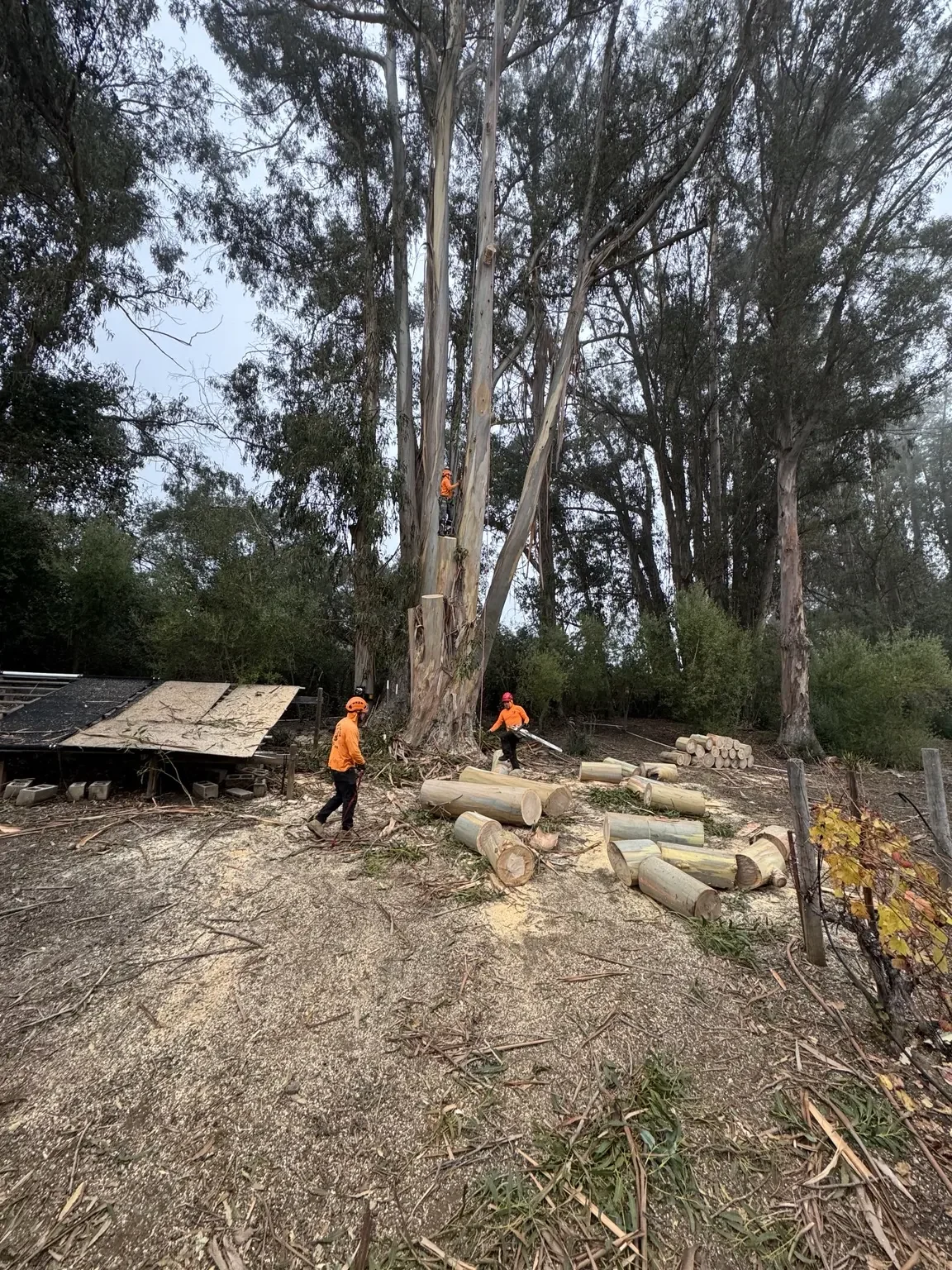
When a tree becomes unsafe, severely damaged, diseased, or conflicts with improvements around your property, professional removal may be necessary. JJI Tree Service provides expert tree removal throughout Menlo Park, CA, using careful planning and specialized equipment to work safely around homes, driveways, landscaping, and neighboring trees.
From storm-damaged trees and declining mature specimens to complex removals in limited-access areas, our licensed and insured team prioritizes safety, precision, and protection of your property from start to finish.
Hazardous Tree Removal
Safely remove hazardous trees that threaten homes, vehicles, or nearby structures due to decay, damage, or structural instability.
Dead Tree Removal
Remove dead or dying trees before they become a safety hazard, attract pests, or damage your property.
Large Tree Removal
Safely remove large and mature trees using professional equipment and proven techniques to protect your home and landscape.
Emergency Tree Removal
Fast and reliable emergency tree removal for fallen, storm-damaged, or hazardous trees that require immediate attention.
Residential Tree Removal
Professional residential tree removal services for homeowners looking to improve safety, create space, or remove unwanted trees.
Tree Removal for Construction
Clear trees safely and efficiently for new construction, home additions, ADUs, pools, and other residential development projects.
Deadwood Removal
Safely remove dead branches throughout the canopy to improve safety, reduce the risk of falling limbs, and maintain tree health.
Storm-Damaged Tree Removal
Safely remove storm-damaged trees and broken limbs to restore safety and prevent further damage to your property.
Tree Removal Ordinance
Menlo Park’s Heritage Tree Ordinance protects mature trees that contribute to the city’s urban canopy. A City permit is required before removing a Heritage Tree, including qualifying dead trees. Heritage Trees generally include most species measuring 15 inches or more in trunk diameter and California-native oaks measuring 10 inches or more, measured 54 inches above natural grade. Removal applications typically require documentation from a City-approved consulting arborist and a tree replacement plan.
If removal is approved, replacement planting or an in-lieu fee may be required. JJI Tree Service understands Menlo Park’s tree removal regulations and can help homeowners identify permit requirements before work begins. Menlo Park Tree Ordinance.
Free EstimateStump Grinding
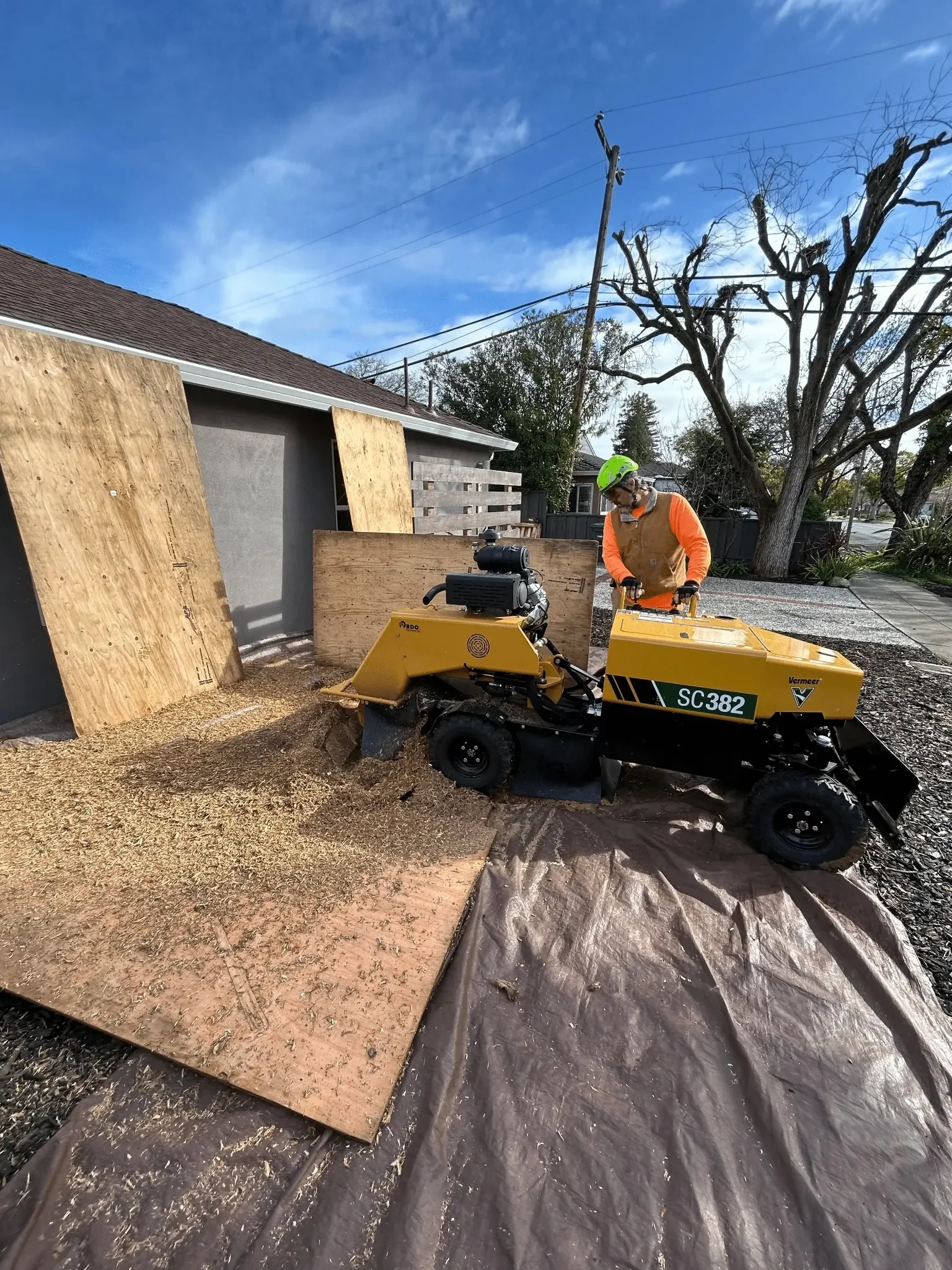
After a tree is removed, the remaining stump can interfere with landscaping, take up valuable yard space, and create an unnecessary obstacle around your property. JJI Tree Service offers professional stump grinding throughout Menlo Park, CA, using specialized equipment to grind unwanted stumps below ground level.
Our experienced crew works carefully around nearby trees, lawns, and landscape features, leaving the area cleaner, safer, and better prepared for new planting, lawn restoration, or future outdoor improvements.
Stump Grinding
Grind tree stumps below ground level to improve curb appeal, eliminate tripping hazards, and prepare your property for new landscaping.
Large Stump Grinding
Safely grind large and mature tree stumps using professional equipment to restore your landscape and reclaim valuable outdoor space.
Multiple Stump Grinding
Remove multiple tree stumps quickly and efficiently to create a clean, level yard that's ready for landscaping or new construction.
Surface Root Grinding
Grind exposed tree roots that create tripping hazards, interfere with landscaping, or damage sidewalks, driveways, and lawns.
Stump Grinding for New Landscaping
Prepare your property for new lawns, gardens, patios, fences, and outdoor living spaces by removing unwanted tree stumps.
Construction Site Stump Removal
Remove tree stumps and remaining root systems to prepare residential and commercial properties for construction and site development.
Difficult Access Stump Grinding
Safely grind tree stumps in backyards, narrow side yards, and other hard-to-reach areas using specialized stump grinding equipment.
Storm Cleanup Stump Removal
Remove tree stumps left behind after storm damage to restore safety, improve curb appeal, and prepare your property for repairs or replanting.
811 Utility Locate Service
Before any stump grinding or excavation work begins, it's important to locate underground utilities to prevent damage to gas, water, electrical, communication, and sewer lines. At JJI Tree Service, safety is our top priority. We handle the 811 utility locate request on behalf of our clients and take every precaution to protect underground utilities before starting work.
About Tree Care in Menlo Park, CA
Menlo Park Tree Care, Tree Preservation & Arborist Services
Menlo Park has a rich history rooted in agriculture, innovation, and environmental preservation that continues to shape the community today. Originally known for its large ranches, oak woodlands, and fertile farmland, Menlo Park evolved into one of the Peninsula’s most desirable residential communities while maintaining its strong connection to nature, open space, and urban forestry.
Today, mature tree-lined streets, scenic neighborhoods, and preserved natural landscapes help define the beauty, character, and environmental quality of Menlo Park.
Trees throughout Menlo Park provide significant environmental, aesthetic, and community benefits. Mature trees create shade, improve air quality, reduce urban heat, lower noise pollution, support local wildlife habitats, reduce stormwater runoff, and increase property value throughout residential and commercial areas. Menlo Park’s urban canopy also contributes to energy efficiency, sustainability, and the peaceful atmosphere that makes the city one of the most attractive communities on the Peninsula.
Menlo Park is home to a variety of important native and ornamental tree species, including Coast Live Oaks, Valley Oaks, Coast Redwoods, California Bay Laurels, Madrones, Sycamores, and native Walnut trees. Coast Live Oaks are among the most iconic native trees throughout Menlo Park and are highly valued for their broad canopies, longevity, drought tolerance, and ability to support local ecosystems and wildlife.
Coast Redwoods, the tallest trees in the world, thrive in the Bay Area’s coastal climate and help improve air quality while contributing to the region’s natural beauty and environmental sustainability. Native Bay Laurels and Madrones also provide important habitat for birds and wildlife while enhancing the diversity and woodland appearance of Menlo Park’s neighborhoods and open spaces.
Proper tree care and maintenance are essential to protecting the health, structure, safety, and longevity of Menlo Park’s trees. Without routine pruning, preventative maintenance, and professional monitoring, trees can become structurally weak, diseased, overgrown, or hazardous during storms and high winds.
Responsible tree trimming and arborist care help preserve healthy growth, improve structural integrity, reduce storm damage risks, and maintain the long-term beauty and safety of the community’s urban forest.
Menlo Park has long prioritized environmental stewardship and the preservation of its mature tree canopy throughout the city. Trees help stabilize soil, improve environmental health, support biodiversity, and preserve the scenic character that residents value throughout the community. Proper tree care not only protects individual trees, but also helps preserve the environmental sustainability and natural beauty of Menlo Park for future generations.
At JJI Tree Service, we are committed to helping protect and preserve Menlo Park’s trees through safe, professional, and environmentally responsible tree care services. Our experienced arborists and tree care specialists provide expert tree trimming, pruning, tree removal, emergency tree services, stump grinding, and preventative maintenance designed to support healthy tree growth and maintain the beauty of Menlo Park for future generations.
Menlo Park residents are in good hands with JJI Tree Service, as we make sure every tree is properly serviced using professional arboricultural practices that prioritize tree health, structural integrity, safety, and long-term sustainability.
Menlo Park Tree Ordinances, Permits & Protected Tree Regulations
Menlo Park has established comprehensive tree protection ordinances designed to preserve the city’s mature urban forest, scenic neighborhoods, environmental health, and long-term sustainability. Trees throughout Menlo Park provide significant environmental, aesthetic, and property value benefits, which is why the city carefully regulates tree removal, tree trimming, pruning, grading, and construction activities that may impact protected trees.
Proper tree care and ordinance compliance are essential because unauthorized tree removal or improper pruning can result in hazardous conditions, environmental damage, permit violations, fines, and long-term tree decline.
The City of Menlo Park protects many native and significant tree species commonly found throughout residential neighborhoods, parks, and commercial properties, including:
- Coast Live Oaks
- Valley Oaks
- Coast Redwoods
- California Bay Laurels
- Madrones
- Sycamores
- Native Walnut Trees
- Other designated heritage and protected tree species
Protected tree regulations in Menlo Park are generally based on tree species, trunk diameter, location, and overall environmental significance. In many situations, tree removal permits are required before removing protected trees or performing major pruning work that significantly alters the tree’s structure, canopy, or long-term health.
Native oak species and mature redwoods receive especially strong protection because of their environmental importance, wildlife habitat value, and contribution to Menlo Park’s urban canopy and neighborhood character.
Menlo Park tree ordinances commonly apply to trees meeting minimum trunk diameter thresholds measured at standard height above grade. The city may also regulate excessive pruning, root disturbance, grading near protected trees, and construction activities within protected root zones.
Improper pruning methods such as topping, lion’s tailing, excessive canopy reduction, or improper branch removal can weaken trees, increase disease risk, create structural instability, and permanently damage tree health and appearance.
Tree removal permits in Menlo Park are typically reviewed based on the overall condition, structural integrity, health, safety risk, and environmental impact of the tree. Permits may be approved when a tree is:
- Dead or dying
- Structurally hazardous
- Diseased beyond recovery
- Causing significant property damage
- Creating unsafe conditions
- Severely declining in health
- Interfering with approved development projects under city review
Depending on the project, the city may require arborist reports, inspections, mitigation measures, replacement planting, or additional permit review before approval is granted. Because Menlo Park tree regulations and permitting requirements can become complex depending on the tree species, size, location, and surrounding construction activity, working with knowledgeable tree professionals is extremely important.
Proper tree trimming and pruning should always follow ANSI A300 arboricultural standards and approved tree care practices to preserve healthy growth, structural stability, environmental value, and long-term safety. Responsible tree maintenance helps reduce storm damage risks, improve public safety, protect surrounding property, and preserve the beauty and environmental value of Menlo Park’s urban forest for future generations.
At JJI Tree Service, we are committed to helping protect and preserve Menlo Park’s trees through safe, professional, and environmentally responsible tree care services. Our experienced arborists and tree care specialists have extensive knowledge of Menlo Park tree ordinances, protected tree regulations, pruning standards, and permit procedures.
We can assist homeowners, property managers, contractors, and businesses throughout the tree permit application and approval process to help ensure all tree trimming, pruning, and tree removal projects are completed safely, professionally, and in full compliance with Menlo Park municipal regulations and arboricultural standards.
Menlo Park residents are in good hands with JJI Tree Service because we understand the importance of proper tree preservation, ordinance compliance, and responsible arboricultural practices that help maintain the beauty, safety, and long-term sustainability of the community’s urban forest.
Work With UsFrequently Asked Questions
What is considered a Heritage Tree in Menlo Park?
Menlo Park generally classifies most tree species as Heritage Trees once they reach 15 inches in trunk diameter. California-native oaks receive additional protection beginning at 10 inches in diameter, measured 54 inches above natural grade. Trees specifically designated by the City can also receive Heritage Tree protection.
Do I need a permit to remove a tree from my Menlo Park property?
A permit is required before removing a tree that qualifies as a Heritage Tree. Menlo Park evaluates removal requests using criteria that include tree health, structural risk, disease, species, utility conflicts, and certain development-related circumstances.
Can I remove a dead Heritage Tree without City approval?
No. Menlo Park still requires a permit to remove a dead Heritage Tree. However, the City allows photographs documenting the tree's condition to be submitted instead of the arborist report normally required for a Heritage Tree removal application.
How much can a Heritage Tree be pruned before a permit is required?
Menlo Park considers removing more than 25% of a Heritage Tree's crown or root system to be significant pruning. A Heritage Tree permit is required before performing this level of pruning.
Why should mature oak trees be pruned carefully?
Mature native oaks can respond poorly to excessive canopy removal, improper cuts, and unnecessary disturbance around their roots. Selective pruning can address deadwood, clearance, structural concerns, and potentially hazardous branches while preserving as much healthy canopy as practical.
What should I do if a tree looks dangerous after a storm?
Look for newly exposed roots, soil movement, splitting trunks, major cracks, hanging branches, or sudden leaning. Menlo Park has a separate emergency process for Heritage Trees presenting an extreme risk, so potentially dangerous conditions should be evaluated promptly.
Does Menlo Park require an arborist report for Heritage Tree removal?
For many non-development Heritage Tree removal and significant-pruning applications, the City requires an arborist report prepared within the previous 12 months by a consulting arborist on Menlo Park's approved list. Dead-tree applications have different documentation provisions.
Can tree roots be damaged during a home renovation?
Yes. Excavation, trenching, grading, soil compaction, and construction equipment can damage important roots without obvious damage to the trunk or canopy. Tree protection should therefore be considered early when planning additions, driveways, landscaping, or other improvements near mature trees.
Can JJI Tree Service remove trees in tight residential spaces?
Yes. Trees growing near homes, fences, garages, driveways, landscaping, or neighboring properties can often be removed in controlled sections. JJI Tree Service uses professional equipment and planned removal techniques to minimize impacts on surrounding property.
Does Menlo Park require a replacement tree after Heritage Tree removal?
Replacement requirements can apply when a Heritage Tree is approved for removal. Depending on the circumstances, Menlo Park may require replacement planting and/or payment of an applicable in-lieu fee, so homeowners should review the conditions of their permit before work begins.
Is stump grinding a good option after removing a tree?
Stump grinding is useful when you want to reclaim yard space without leaving a large stump behind. It can eliminate a tripping obstacle, improve the appearance of the landscape, and make the area easier to prepare for lawn restoration, planting, or other outdoor improvements.
What's the difference between crown thinning and crown reduction?
Crown thinning selectively removes branches throughout portions of the canopy to improve structure and manage density. Crown reduction carefully decreases a tree's overall height or spread using appropriate lateral branches. They address different problems and should not be confused with topping.
Can a Heritage Tree be removed because it is damaging my property?
Possibly, but Heritage Tree status means removal isn't automatic. Menlo Park considers specific criteria when reviewing permit applications, so the tree's condition, location, impacts, available alternatives, and circumstances surrounding the requested removal can all be important.
What trees are commonly found around Menlo Park homes?
Menlo Park's established neighborhoods contain a mixture of native and ornamental trees, including mature oaks, redwoods, magnolias, maples, sycamores, cedars, and other species. Different trees require different approaches to pruning, clearance, irrigation, and long-term maintenance.
When is the best time to schedule professional tree maintenance?
There isn't one ideal season for every tree. Species, age, health, pruning objective, flowering cycle, weather, and structural condition all matter. Hazardous deadwood or broken limbs may need attention immediately rather than waiting for a particular season.
Why choose JJI Tree Service for tree service in Menlo Park?
JJI Tree Service provides professional tree removal, tree trimming, tree pruning, stump grinding, and emergency tree services in Menlo Park, CA. We focus on careful workmanship, property protection, and responsible tree care while helping homeowners understand local Heritage Tree requirements that may affect their projects.
Need Tree Service?
Tell us about your project and we'll help you schedule an evaluation.